Work coordination platform
Designed for the automotive industry
As a leader in innovation, you understand the importance of staying ahead of the curve in the fast-moving automotive 4.0 world. KanBo provides you with the tools to do just that by facilitating smart factory operations, streamlining project management, fostering collaboration and solving complex problems.
Optimizing Efficiency: A Guide to Task Management and Parts Services Administration for Your Business
Introduction:
In today’s fast-paced and highly competitive business world, companies are always looking for ways to streamline their operations, improve productivity, and cut down on costs. One of the most effective ways to achieve these goals is by using a work coordination platform like KanBo, which is specifically designed for large enterprises.
Status Roles:
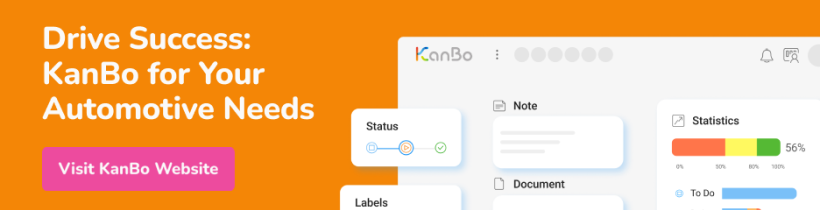
One of the key features that sets KanBo apart from other work coordination platforms is its use of status roles. These roles are designed to help users organize their tasks and provide a clear overview of what stage each task is at. Users can choose from four different status options: Not Started, In Progress, Completed, and Information. Changing the status is incredibly simple and can be done with just a few clicks.
Benefits:
KanBo offers a range of benefits for large enterprises, including improved collaboration, streamlined workflows, and greater efficiency. By bringing together all teams, departments, and stakeholders, KanBo makes it easier for businesses to communicate and work together seamlessly.
Product Tour:
KanBo’s user-friendly interface, and easy-to-use features make it the ideal work coordination platform for large enterprises. The platform’s task management system is particularly impressive, making it simple to assign tasks, set deadlines, and track progress in real-time.
Focus on Task Management in Automotive:
KanBo has a host of features specifically designed for the automotive industry. With advanced task management tools, businesses can streamline their operations, ensure compliance with regulations, and improve collaboration across all departments. KanBo also offers robust reporting and analytics capabilities, which can help automotive businesses gain critical insights into their processes and identify areas for improvement.
Conclusion:
In conclusion, KanBo is a work coordination platform that is specifically designed for large enterprises looking to streamline their operations, improve productivity, and cut down on costs. With its user-friendly interface, easy-to-use features, and focus on task management, KanBo is the perfect solution for businesses in the automotive industry – or any other industry for that matter – looking to stay ahead of their competition.
As a Parts Services Administrator in the Automotive industry, you are constantly juggling multiple tasks and responsibilities. With KanBo and its powerful task management capabilities, you can easily stay on top of your workload and ensure that everything is completed on time. Here’s a guide on how to effectively use KanBo to manage your workweek:
Monday: Start by reviewing your KanBo workspace and creating a new card for each task that needs to be completed this week. Assign them to the appropriate individuals and set a due date for each card.
Tuesday: Use KanBo’s checklist feature to break down each task into smaller, manageable subtasks. This not only makes it easier to complete each task, but it also ensures that nothing important is overlooked.
Wednesday: Take advantage of KanBo’s collaboration features by leaving notes and comments on each card. This allows team members to communicate more effectively, ensuring that everyone is on the same page.
Thursday: Monitor the progress of each card using KanBo’s activity stream and notification feature. This provides real-time updates on any changes made to a card or when a card has been completed.
Friday: Wrap up the week by reviewing the status of each card and updating it accordingly. Use KanBo’s reporting capability to generate insights on team performance and identify areas for improvement.
By using KanBo to manage your workweek as a Parts Services Administrator in the Automotive industry, you can stay organised, increase productivity and collaborate more effectively with your team.
Yes, KanBo is much more than just a tool for task management. While it excels at managing tasks and coordinating work between teams, it also offers a variety of features and capabilities that make it a comprehensive work coordination platform for enterprises.
For instance, KanBo allows users to manage multiple projects simultaneously, collaborate with colleagues in real-time, and coordinate work across departments and teams. It also offers a range of views, including Kanban, list, table, calendar, and Gantt chart, making it easy to view work progress across different workstyles and methodologies.
In addition, KanBo supports document management, allowing users to create document groups, folders, and references directly within their KanBo workspace. The platform also integrates seamlessly with other tools, including Microsoft Office 365, Google Suite, AWS, Salesforce, and more.
Furthermore, KanBo emphasizes transparency, trust, and autonomy, encouraging employees to take ownership of their work and make autonomous decisions in alignment with organizational goals. The platform also promotes a culture of innovation and creativity, fostering an environment where experimentation and exploration of new ideas are encouraged.
In short, while task management is an essential feature of KanBo, it is just one of many capabilities that make it a comprehensive work coordination platform designed to bring together all aspects of work within a large enterprise.
Q&A
1) Q: What are KanBo’s status roles and how do they help in task management?
A: KanBo’s status roles include Not Started, In Progress, Completed, and Information. They help users organize their tasks and provide a clear overview of what stage each task is at. Users can easily change the status by clicking on it, allowing for streamlined task management.
2) Q: What benefits does KanBo offer for large enterprises?
A: KanBo offers benefits such as improved collaboration, streamlined workflows, and greater efficiency. By bringing together all teams, departments, and stakeholders, KanBo makes it easier for businesses to communicate and work together seamlessly. Its task management system is particularly impressive, making it simple to assign tasks, set deadlines, and track progress in real-time.
3) Q: How can KanBo benefit businesses in the automotive industry specifically?
A: KanBo has features specifically designed for the automotive industry, including advanced task management tools that can help businesses streamline operations, ensure compliance with regulations, and improve collaboration across all departments. KanBo also offers robust reporting and analytics capabilities, which can help businesses in the automotive industry gain critical insights into their processes and identify areas for improvement.
Use Case: How KanBo’s Status Roles Simplify Tasks in Automotive Industries
Let’s take an example of a parts services organization in the automotive industry. The organization receives quotations and sales orders from customers and processes them to meet their needs. They also manage the core return process and ensure timely return of all parts identified for core return. Furthermore, they provide customer support, train customers to use the company’s online portal, and track and present department metrics to the leadership team.
Such tasks can become complicated and overwhelming without proper organization and coordination. This is where KanBo’s status roles come into play. The organization can use KanBo’s task management system to assign tasks, set deadlines, and track progress in real-time using status roles.
For instance, they can assign the “not started” role to new quotations and sales orders, indicating that they are not yet in progress. Once they start working on them, they can change their status to “in progress.” Upon completion, they can change their status to “completed.” They can also use the “information” status for tasks that contain important information but are not executable.
By using KanBo’s status roles, the organization can get a clear overview of what stage each task is at, helping them streamline their workflows and increase productivity. They can also use KanBo’s integration with Microsoft Office to simplify their tasks further.
For example, they can create and edit documents within KanBo’s workspace using Microsoft Office tools like Word, Excel, and PowerPoint. They can also share them with their team members and customers, enhancing collaboration and communication. Moreover, they can use KanBo’s reporting and analytics capabilities to gain critical insights into their processes and identify areas for improvement.
In conclusion, KanBo’s status roles simplify tasks in automotive industries by providing a clear overview of what stage each task is at. By using KanBo’s task management system and integration with Microsoft Office, businesses can streamline their workflows, improve collaboration, and increase productivity.